How to Swim With the Manta Rays on the Big Island
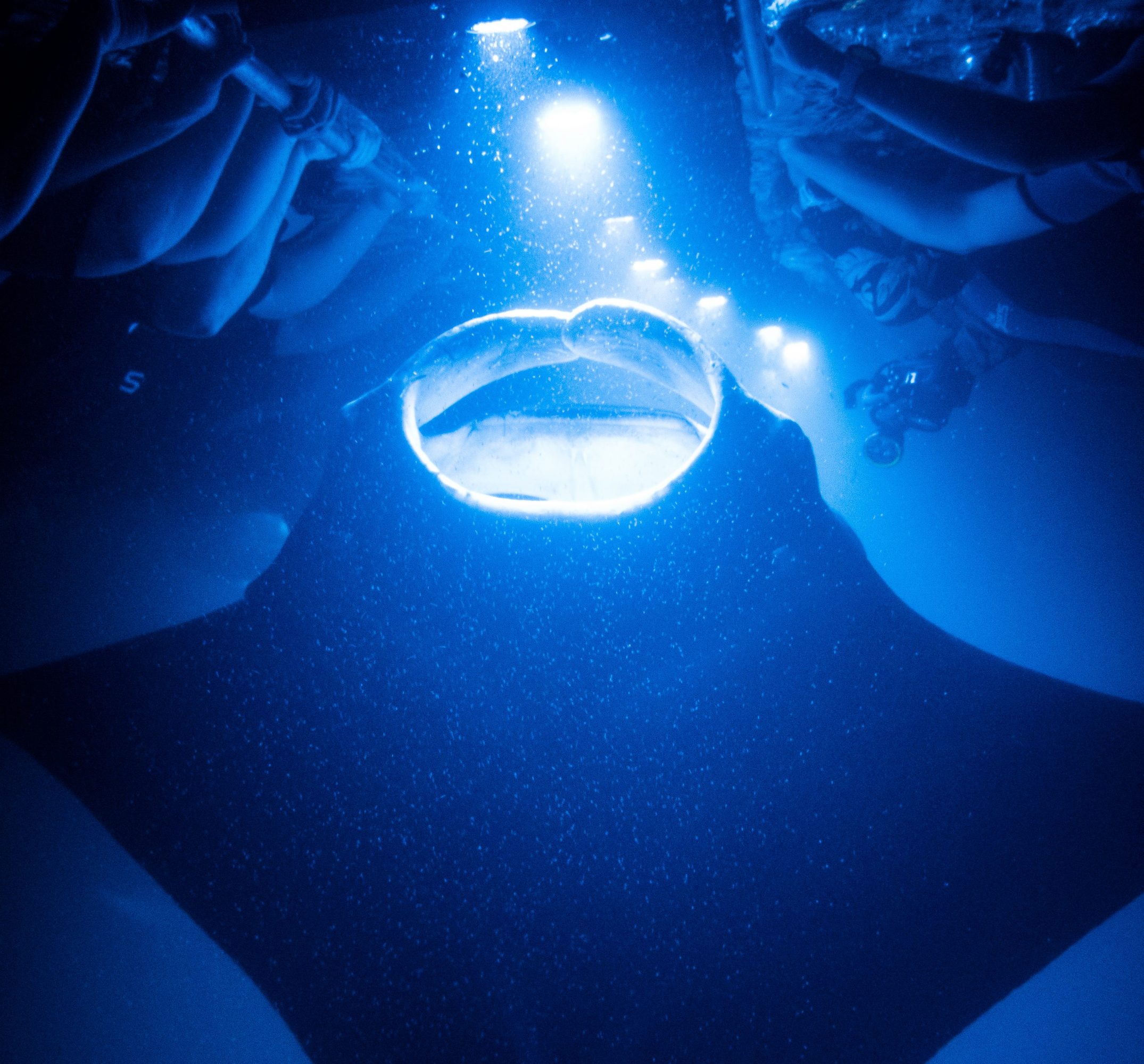
To swim with the manta rays on the Big Island means slipping into calm nighttime water and watching giant manta rays glide beneath you with slow, sweeping motion. At Sea Quest Hawaii, we guide people through this experience every night. We know the coastline, the currents, and the rays themselves. Kona is the best place in the world to meet these animals, and we treat each encounter with care and respect.
What Are Manta Rays?
Manta rays are large, harmless filter-feeding animals. They eat plankton. They have no stingers, teeth, or barbs. Their wingspans reach 12 to 16 feet, but they behave with complete gentleness.
When guests swim with the manta rays on the Big Island, they always ask the same thing: “Do they get close?” Yes, they do. Sometimes very close. But mantas avoid contact with amazing precision. They sense everything around them. They glide through tight spaces with ease.
We see the same individuals often. Our crew knows them by their belly patterns. Each ray has a unique marking. That helps us track them and protect them.
Why Is Big Island the Best Place to Swim With Manta Rays?
Kona’s coastline forms the perfect manta environment. The ocean stays calm and the reef structure funnels plankton into predictable areas. Guided manta tours shine soft lights into the water. Plankton gathers in the beam. The mantas follow.
The Big Island offers the highest manta sighting rate anywhere. This happens because:
- The west coast has stable weather.
- The water stays consistently clear.
- Plankton collects in natural pockets near the reef.
- The manta population here is strong and protected.
- Local rules prevent harm or disturbance to wildlife.
At Sea Quest Hawaii, we already know which manta families frequent each site. Some rays have visited us for decades. Their presence shows how stable this ecosystem remains.
How Does a Manta Snorkel Work?
Guests often imagine something complicated. It’s actually very simple. Here’s what we do on every trip:
- Check you in at our Kona dock.
- Fit you with a wetsuit top, snorkel, and mask.
- Give a short briefing on safety and manta behavior.
- Motor out to the manta zone at sunset or after dark.
- Place our floating light board in the water.
- Guide you in gently, one person at a time.
- Have you hold the board and float still.
- Watch the rays appear as plankton builds under the lights.
The entire snorkel portion usually lasts 30 to 45 minutes. Many people say it feels like five because the scene absorbs all attention.
What Should You Bring With You on a Manta Ray Snorkel Tour?
You do not need much. We provide the essentials, but we recommend a few simple additions:
- Swimsuit
- Towel
- Light jacket for after the snorkel
- A dry bag for any personal items
- Warm clothes in your car for later
We give you a wetsuit top because the ocean cools at night. It adds warmth and buoyancy. Most guests appreciate that support.
Is a Manta Swim Good for Beginners?
Yes. Most of our guests have never snorkeled at night. Many have never snorkeled at all. That’s fine. The manta experience works well for beginners because you do not swim around.
You hold a floating light board. You stay still. The crew stays close. We help you in and out of the water. The wetsuit keeps you buoyant.
Beginners like the manta tour because:
- You stay at the surface.
- You remain in a stable position.
- You follow simple instructions.
- The rays approach you rather than the other way around.
- The crew handles every detail.
If you can breathe through a snorkel and relax your body, you’ll do great.
How Long Does the Experience Last?
- Check-in
- Boat ride (10–20 minutes)
- Snorkel session (30–45 minutes)
- Return ride
The entire outing usually lasts around 90 minutes to two hours. It never feels rushed. We schedule trips to hit the best manta window without keeping guests on the water all night.
What Should You Not Do When Swimming With Mantas?
We keep our rules simple. These protect the animals and keep the experience smooth.
Do not:
- Touch the rays
- Dive down below the board
- Kick your fins downward
- Splash or wave your arms
- Use flash photography
- Chase the animals
These rules allow the mantas to feed naturally. When they feel comfortable, they stay longer and make more passes. Calm guests get the best show.
What Does Sea Quest Hawaii Do to Protect the Mantas?
We focus on ethical viewing. Our crew follows all conservation guidelines. We keep distance with the boat, limit group sizes, and never allow touching or chasing.
Protection steps include:
- Strict “look only” behavior
- No bright flashes
- No drifting into feeding lanes
- Respectful spacing between groups
- Consistent education for guests
This keeps the manta population healthy. It also ensures future visitors can enjoy the same magic.
FAQs
How close do manta rays get?
Very close. Sometimes inches away, but they never collide.
Are manta rays dangerous?
No. They have no stingers or barbs and no interest in people.
Do they show up every night?
Most nights. Kona has some of the highest manta sighting rates in the world.
Do I need to be a strong swimmer?
No. You float at the surface holding a board.
Is it scary?
Most guests say it feels calming and gentle, not scary.
A chance to swim with the manta rays on the Big Island stays with people for years. The quiet water, the soft light, and the graceful motion of the rays create something rare: a wildlife encounter that feels personal, peaceful, and completely natural. At Sea Quest Hawaii, we guide these experiences every night, and we never get tired of the view.