Swimming With Manta Rays on Big Island

Swimming with manta rays on Big Island means floating in calm nighttime water while giant manta rays glide beneath you in slow, graceful loops. At Sea Quest Hawaii, we guide this experience along the Kona coast, where manta rays return night after night to feed.
Kona is one of the few places in the world where manta ray encounters happen so consistently. The coastline supports a healthy manta population. The reef structure creates natural feeding lanes. Our role is to guide people into the water safely and protect the rays at the same time.
What Are Manta Rays?
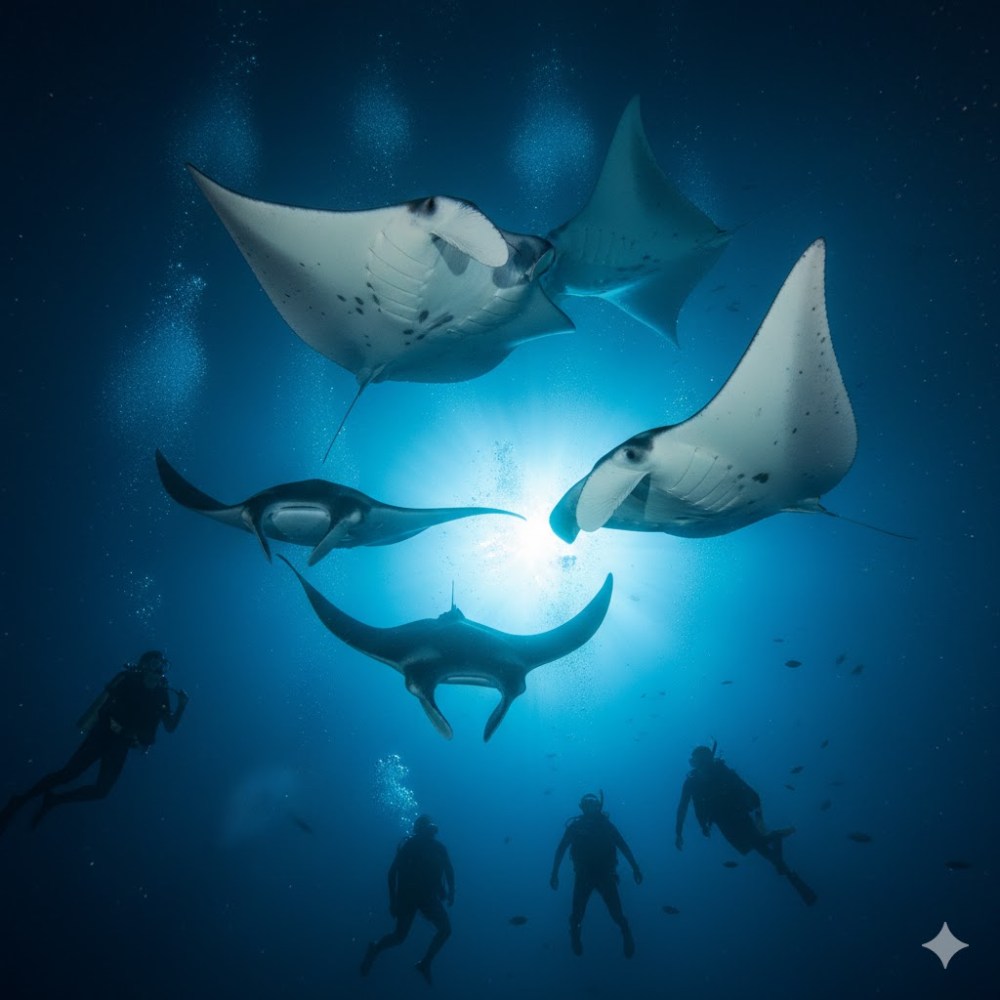
Manta rays are large, gentle animals that feed only on plankton. They do not sting or bite. They do not defend territory. Their wingspans can reach 12 to 16 feet, yet their movement stays soft and controlled.
When guests ask if mantas are dangerous, the answer is simple. They are not. Manta rays focus on feeding. They show no interest in people. Their size may look intimidating, but their behavior stays calm.
Each manta ray has a unique belly pattern. These markings help scientists identify individuals. Many of the rays we see have been visiting Kona waters for decades. Some appear almost nightly.
Why Is Swimming with Manta Rays on Big Island So Special?
The Big Island offers ideal conditions for manta rays. Kona’s west coast stays protected from strong winds. The water remains clear. Plankton gathers near the reef at night. When lights shine into the water, the plankton rises. The mantas follow.
Swimming with manta rays on Big Island works so well because:
- The coastline stays calm most nights
- The reef structure supports plankton growth
- The manta population remains protected
- Sightings happen year-round
- Local rules limit disturbance
Few places in the world offer this level of reliability. That makes Kona a global destination for manta encounters.
How Does a Manta Ray Night Snorkel Work?
The process stays simple. We keep it that way to reduce stress and protect the animals.
Here is what happens on a typical tour:
- Guests check in near the Kona harbor.
- We fit snorkel gear and wetsuit tops.
- Our crew explains manta behavior and safety rules.
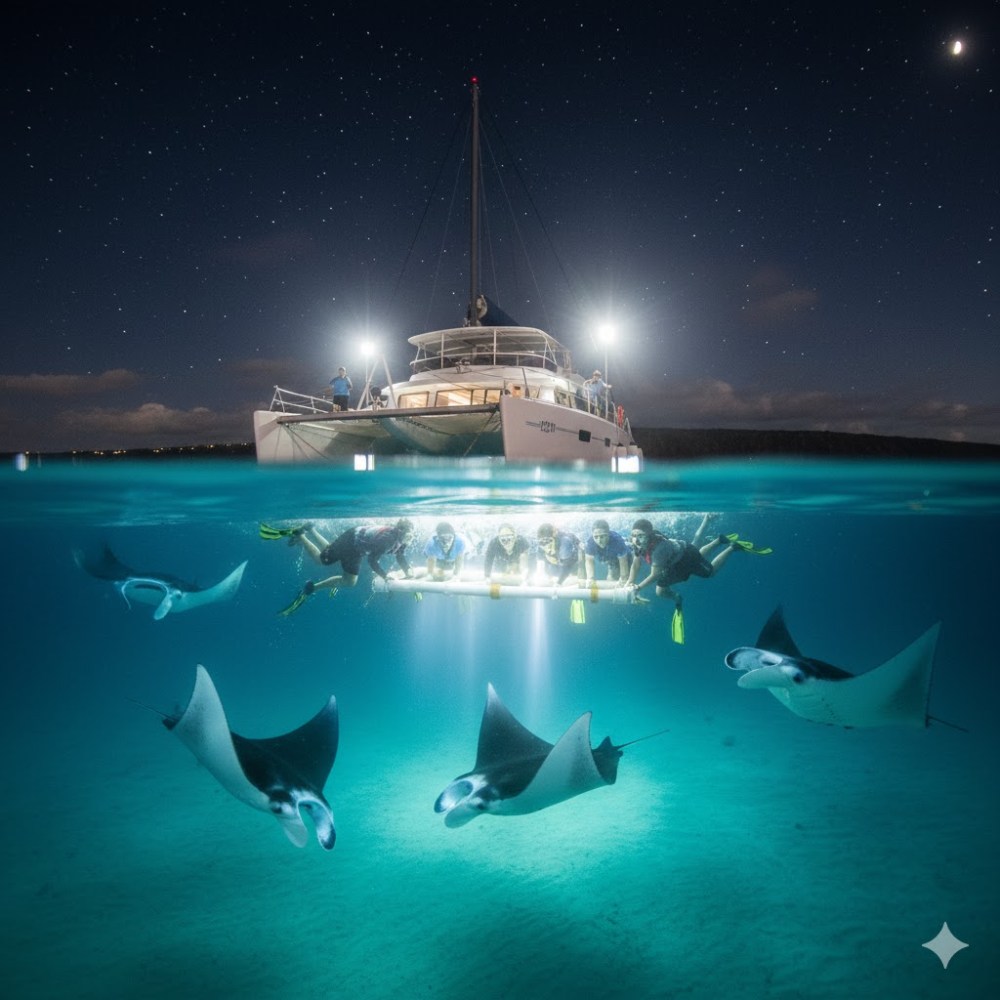
- We travel by boat to the manta site after sunset.
- A floating light board enters the water.
- Guests hold onto the board and float.
- Lights attract plankton.
- Mantas arrive and begin feeding.
The snorkel portion lasts about 30 to 45 minutes. The full experience usually takes around 90 minutes.
How Close Do the Manta Rays Get?
Very close. Sometimes only inches away. Mantas have strong spatial awareness. They avoid contact with ease. Even when they pass directly beneath you.
Close passes happen because:
- Plankton gathers near the surface
- Mantas feed upward through the light
- They roll gracefully to collect food
- They loop back down and repeat
Watching this pattern unfold feels like witnessing underwater choreography.
Is Swimming With Manta Rays Safe?
Yes. Swimming with manta rays on Big Island remains safe when guided by experienced operators. The rays pose no threat. The structure of the tour keeps guests secure.
Safety measures include:
- Surface-only snorkeling
- Floating light boards for stability
- Wetsuit tops for buoyancy
- Crew members in the water
- Clear rules about staying still
Guests do not dive down. They do not chase the rays. They simply float and observe.
Is This Experience Good for Beginners?
Yes. Many guests have never snorkeled before. Some feel nervous about night water. That is normal. The manta experience works well for beginners because movement stays minimal.
Beginners benefit from:
- Holding a floating board
- Staying at the surface
- Wearing buoyant wetsuits
- Clear instruction from the crew
- Calm water conditions
We help each guest enter and exit the water carefully. No one goes in alone. Support stays constant.
What Rules Protect the Manta Rays?
Protecting the mantas matters. These animals return because they feel safe.
We ask guests to follow simple rules:
- Do not touch the rays
- Do not dive down
- Do not kick downward
- Do not splash or wave arms
- Do not use flash photography
Following these rules allows mantas to feed naturally. Calm behavior leads to longer, closer encounters.
What Makes Sea Quest Hawaii Different?
We focus on respectful wildlife encounters. Our crew knows the Kona manta population well. We recognize individual rays. We track their behavior. We adjust tours based on conditions.
Guests choose Sea Quest Hawaii because we offer:
- Experienced captains
- Local naturalists
- Clean, high-quality gear
- Clear communication
- Strong safety standards
We balance access with protection. That keeps the experience meaningful.
How Often Do You See Mantas?
Most nights. Kona has one of the highest manta sighting rates in the world. While wildlife is never guaranteed, our success rate stays high because the conditions support regular feeding behavior.
Even nights with fewer rays still feel special. The ocean remains calm. The light creates a glowing scene. The experience never feels rushed.
Come Join Us and Meet Hawaii’s Manta Rays
Swimming with manta rays on Big Island offers something rare. It combines wildlife, calm water, and quiet moments in nature. At Sea Quest Hawaii, we guide this experience with care. We protect the rays. We support our guests. And we share one of the most memorable encounters Hawaii has to offer.