
Is Swimming with Manta Rays Risky? What You Need to Know
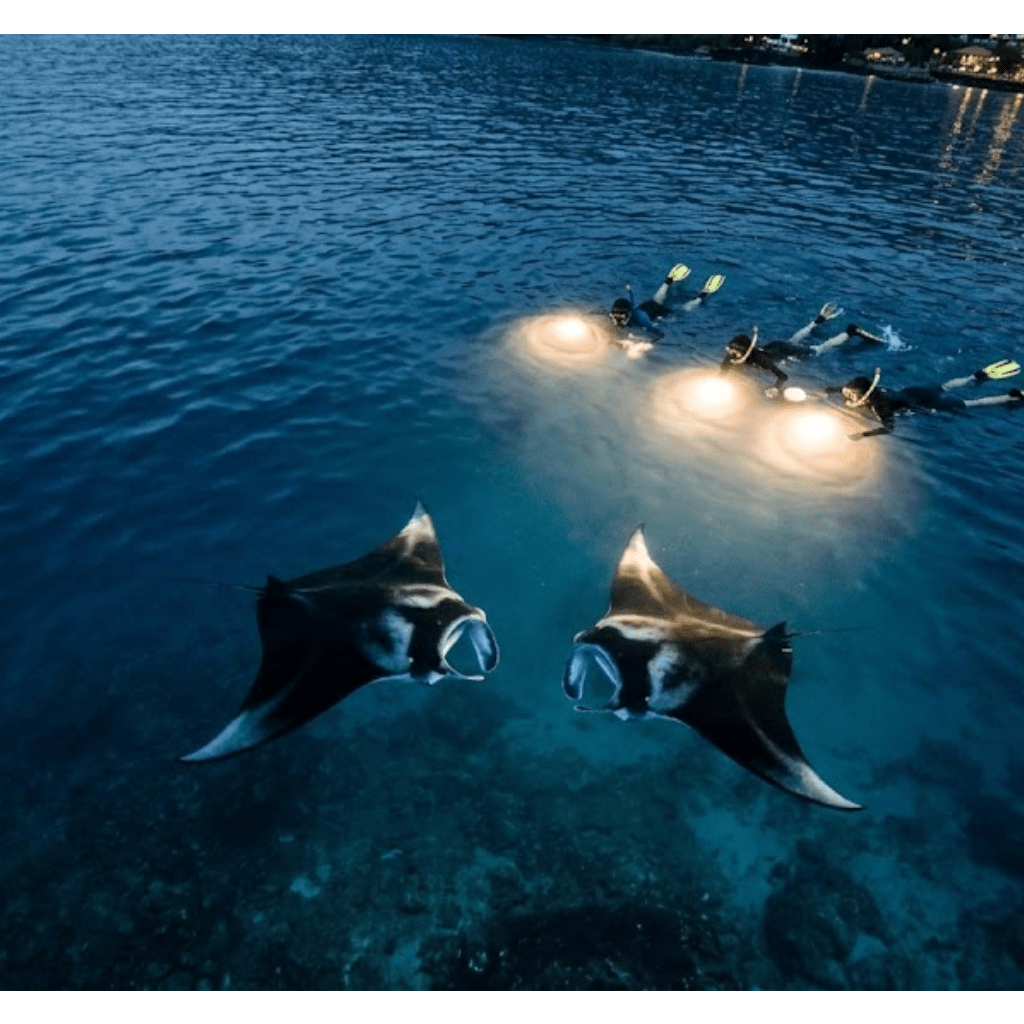
People ask us this question all the time, usually right before they book their first night manta ray snorkel. And it’s a fair question. You’re about to float in dark ocean water while animals the size of a small car glide past you. It sounds intense. So, is swimming with manta rays risky?
The short answer is no. The longer answer explains exactly why, and what you can do to make sure your encounter goes well for both you and the manta rays.
Is Swimming with Manta Rays Risky? The Short Answer: Manta Rays Are Not Dangerous to Humans
Manta rays have no stinger. They have no barb. They do not bite, attack, or behave aggressively toward people. They are filter feeders, which means their entire diet consists of tiny zooplankton, krill, and small crustaceans they scoop from the water with their open mouths.
Their throats are roughly the size of an adult’s fist. You are not on their menu, and nothing in their biology is designed to hurt you.
Manta rays are also genuinely curious animals. Studies on manta ray intelligence suggest they have one of the highest brain-to-body ratios of any fish species. They recognize boats, return to the same feeding sites night after night, and will often approach snorkelers on their own terms. That curiosity is what makes the night snorkel experience so extraordinary.
How Manta Rays Differ from Stingrays
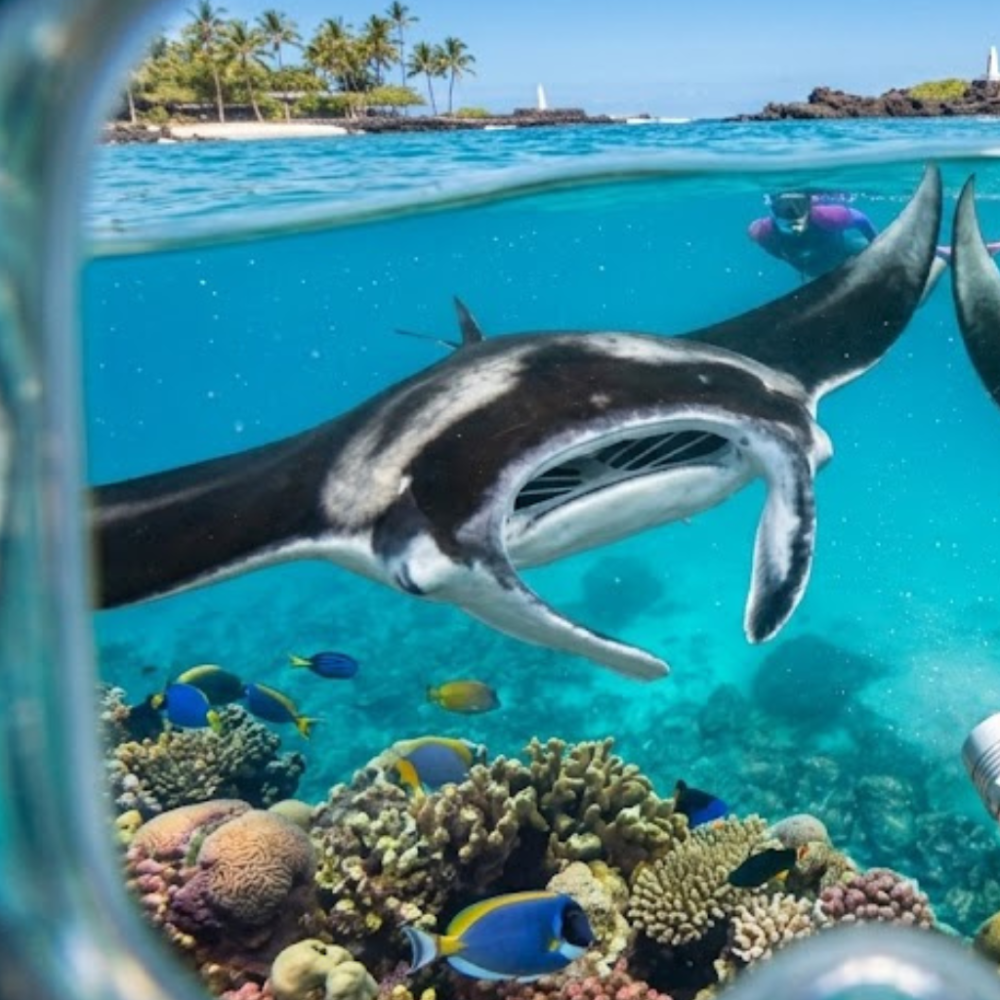
The confusion is understandable. Manta rays and stingrays belong to the same biological family, and they share a similar flattened body shape and long tail. But that’s where the similarity ends.
Stingrays are bottom-dwellers. They rest on the seafloor and use their venomous barb defensively when stepped on or cornered. Manta rays live in the open water column and have no venomous barb at all. Their tail is vestigial, meaning it serves no defensive function. A research review published in 2022 that tracked more than 4,900 reef manta rays found that the injuries seen on these animals came from boat strikes and fishing gear entanglement, not from contact with other animals or humans. They simply don’t fight.
What the Real Risks of Swimming with Manta Rays Look Like
Here’s the part that deserves an honest answer. Is swimming with manta rays risky in any way? Yes, but the risk has nothing to do with the animals.
Night snorkeling in open ocean water does carry environmental factors to take seriously. Boat traffic in the dark is a real consideration. Currents can shift. Disorientation in low-light conditions can affect swimmers who are unfamiliar with the ocean. On the Kona Coast specifically, the shoreline near the manta ray feeding sites consists of sharp lava rock, which makes unguided shore entry at night genuinely hazardous.
None of these factors apply when you go with a professional operator. The boat keeps you away from traffic. Guides manage current positioning. Flotation boards keep you stable at the surface. The experience is designed around the risks that exist, and those risks are well-managed.
Why Going Solo Is the Risk, Not the Manta Rays
Some visitors try to swim to the manta ray feeding sites on their own, from shore, at night. This is the scenario that creates real danger. Sharp lava rock, sea urchins, unpredictable surf, and boat traffic in the dark are serious hazards for anyone without a vessel and professional support.
Every reputable operator on the Kona Coast uses a boat specifically to eliminate these environmental risks. When you join a guided tour, you board a vessel, receive a full safety briefing before entering the water, and stay supported by certified crew throughout the experience. That structure is what makes the manta ray night snorkel safe.
How Sea Quest Hawaii Keeps Your Manta Ray Night Snorkel Safe
At Sea Quest Hawaii, we’ve been operating snorkel tours along the South Kona Coast for over 35 years. Our captains hold US Coast Guard licenses. Every guide on our Night Manta Ray Snorkel is trained in water safety and certified to respond to in-water emergencies.
Before you enter the water, we walk you through exactly what to expect: how to hold the flotation board, how to position your body, how to breathe through your snorkel, and how to interact with the mantas in a way that respects their feeding behavior. We depart from Keauhou Bay, just minutes from one of the most consistent manta ray viewing areas on the coast, known locally as Manta Village.
Our tours run in small groups. This keeps the water less crowded and allows our guides to give you direct attention in the water. We use illuminated flotation boards so you stay visible and stable at the surface throughout the experience.
We also have a Manta Guarantee Policy. On the rare occasion that no manta rays appear during your tour, we invite you back on another night at no additional cost.
Book the Night Manta Ray Snorkel with Sea Quest Hawaii here.
What You Should Do (and Avoid) During a Manta Ray Encounter
This is practical, and it matters both for your safety and the health of the animals.
Stay horizontal at the surface. A vertical body position with fins dangling downward puts you in the path of an approaching manta ray and increases the chance of accidental contact.
Stay calm and still. The more you splash or move, the more likely the mantas are to change course. Stillness is what draws them close.
Do not touch the manta rays. This is both a behavioral guideline and a legal requirement. Manta rays in Hawaiian waters are a protected species. Touching them removes the protective mucus coating on their skin, which guards against infection. It can also alter their behavior at the feeding site over time, which affects every guest who comes after you.
Do not use flash photography. Bright flashes disorient the mantas, especially in the dark, and can disrupt their feeding. Most underwater cameras perform well in low light without a flash.
These are not difficult rules to follow. They exist to protect the animals and to make sure the experience stays exactly as good as it is.
Frequently Asked Questions About Swimming with Manta Rays
Can a manta ray hurt you?
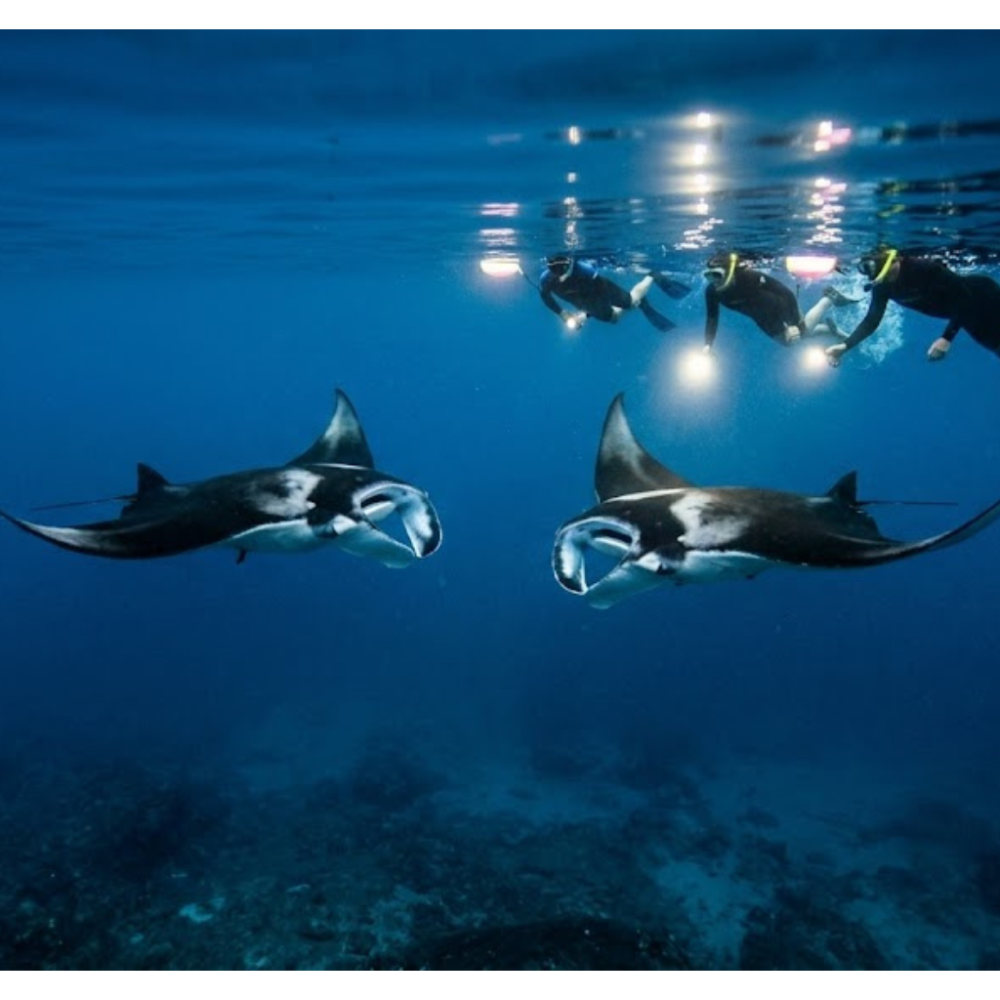
No. Manta rays have no stinger, no barb, and no predatory behavior toward humans. Their mouth opening is large but their throat is only roughly the size of an adult’s fist, so they cannot swallow a person. The only realistic physical risk is accidental contact from a large fin, and staying still and horizontal in the water prevents this entirely.
Do you need swimming experience to do the manta ray night snorkel?
Yes. Guests need to be comfortable swimmers and have prior snorkeling experience. You do not need scuba certification for the snorkel version of the tour. Sea Quest Hawaii provides illuminated flotation boards that keep you at the surface throughout the experience, which significantly reduces the physical demand compared to open-ocean swimming.
Is the manta ray night snorkel safe for children?
Sea Quest Hawaii sets a minimum age of 7 for the Night Manta Ray Snorkel. Children must be comfortable in open ocean water and should have a supervising adult with them in the water at all times. If your child has prior snorkeling experience and feels confident in the water, this tour is genuinely accessible for them.
Are manta rays in Hawaii protected?
Yes. Manta rays are a protected species in Hawaiian waters. It is illegal to touch, chase, ride, or harass them in any way. Before guests enter the water, Sea Quest Hawaii guides teach the passive interaction standards that keep both participants and animals safe.
What happens if no manta rays show up on our tour?
Manta ray sightings are consistent on the Kona Coast, but wildlife encounters are never guaranteed. Sea Quest Hawaii offers a Manta Guarantee Policy: if zero manta rays appear during your tour, you receive an invitation to return on another night at no additional cost.
Still wondering whether swimming with manta rays risky enough to skip? Consider that the Travel Channel named this tour one of the top ten things to do in your lifetime. The ocean near Keauhou Bay is home to a resident population of over 200 manta rays. On most nights, several of them will feed directly below you.
The risk is in missing it.
View all Sea Quest Hawaii snorkeling tours and book your adventure here.