
What Is Manta Ray Village in Kona? Everything to Know
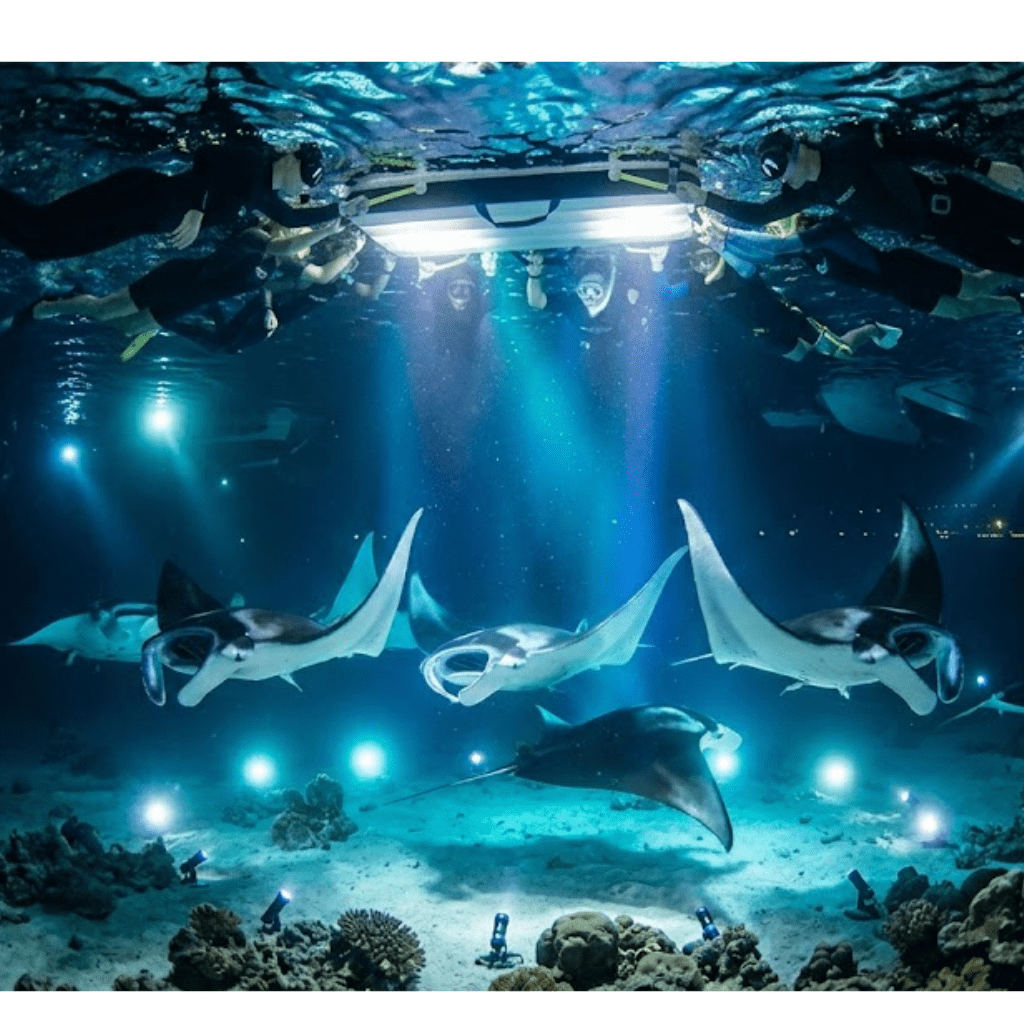
Manta Ray Village in Kona is the informal name for one of the most consistent manta ray feeding sites on the planet. Its official geographic name is Kaukalaelae Point, and it sits just outside Keauhou Bay on the west coast of the Big Island, approximately 6 miles south of Kailua-Kona.
Every night, manta rays return here to feed. Not seasonally. Not occasionally. Night after night, year-round.
That kind of consistency is rare. It’s also the reason Sea Quest Hawaii bases its Night Manta Ray Snorkel tour out of Keauhou Bay and has done so for over 35 years. The site is only accessible by boat due to the rocky volcanic coastline, which means a guided tour is the only real way to experience it.
This article answers, “what is Manta Ray Village in Kona?” plus how Manta Ray Village came to exist, why it works, and what you can expect when you visit.
Where and What Is Manta Ray Village in Kona, Hawaii?
Manta Ray Village sits at Kaukalaelae Point, a short distance from the mouth of Keauhou Bay on the South Kona Coast. The Outrigger Kona Resort and Spa occupies the shoreline directly above the site.
From our departure point at Keauhou Bay, the boat ride to the feeding site takes only a few minutes. That proximity matters. It gives guests more time in the water and less time in transit, which is not true of every operator on the island.
The volcanic coastline makes shore access impossible, so you can only reach the site by boat. There are no trails, no swim-in access points, and no way to observe the manta ray feeding behavior from land.
The History Behind Manta Village Keauhou Bay
The origin of this place is, genuinely, an accident.
In the early 1970s, the Kona Surf Hotel stood on the shoreline above Kaukalaelae Point. Hotel management installed bright floodlights aimed at the water so guests could watch the surf at night from their rooms and the oceanfront restaurant. Nobody planned for what came next.
Those lights attracted phytoplankton and zooplankton to the surface. Manta rays feed on plankton, and they quickly learned that this particular stretch of water offered a reliable, nightly food source. They started showing up. Then they kept showing up, night after night, through conditioned behavior built over years of consistent feeding.
The site became Manta Ray Village.
In May 2000, the Kona Surf Hotel closed its doors. The lights went dark. Without light, the plankton dispersed. Without plankton, the manta rays stopped coming.
The site sat dormant for four years.
When the resort reopened in October 2004 as the Sheraton Kona Resort and Spa, marine advocates worked directly with management to reinstall the floodlights in a way that would restore conditions favorable to the manta rays. The lights went back on. The plankton returned. And shortly after, so did the mantas.
The resort is now the Outrigger Kona Resort and Spa. The manta rays never left again.
How Lights and Plankton Created a Manta Ray Feeding Ground
The biology behind Manta Ray Village is worth understanding because it explains both why the site exists and how the tour itself works.
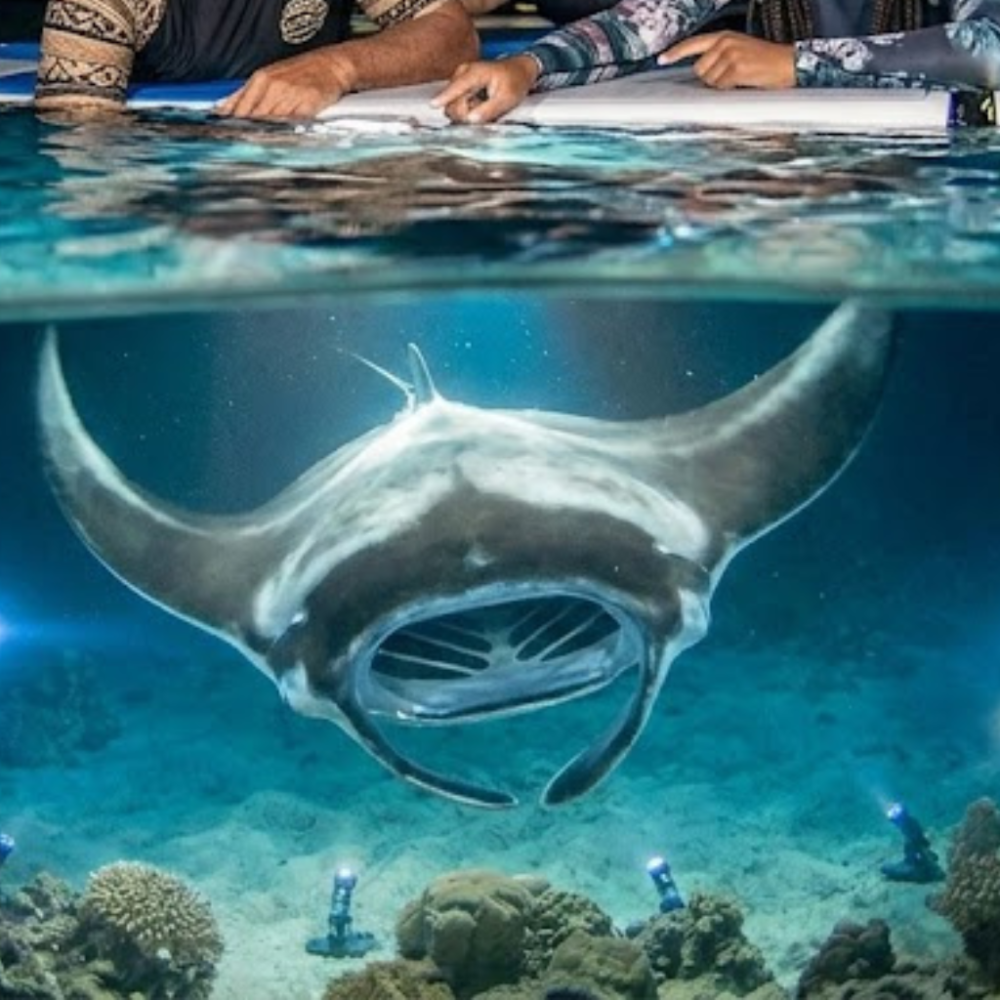
Artificial lights attract microscopic marine organisms to the surface at night. Manta rays are filter feeders. They open their cephalic fins wide and perform slow, rolling loops through concentrated patches of plankton, funneling food into their mouths on each pass. That feeding loop is the motion you watch from the surface during the tour.
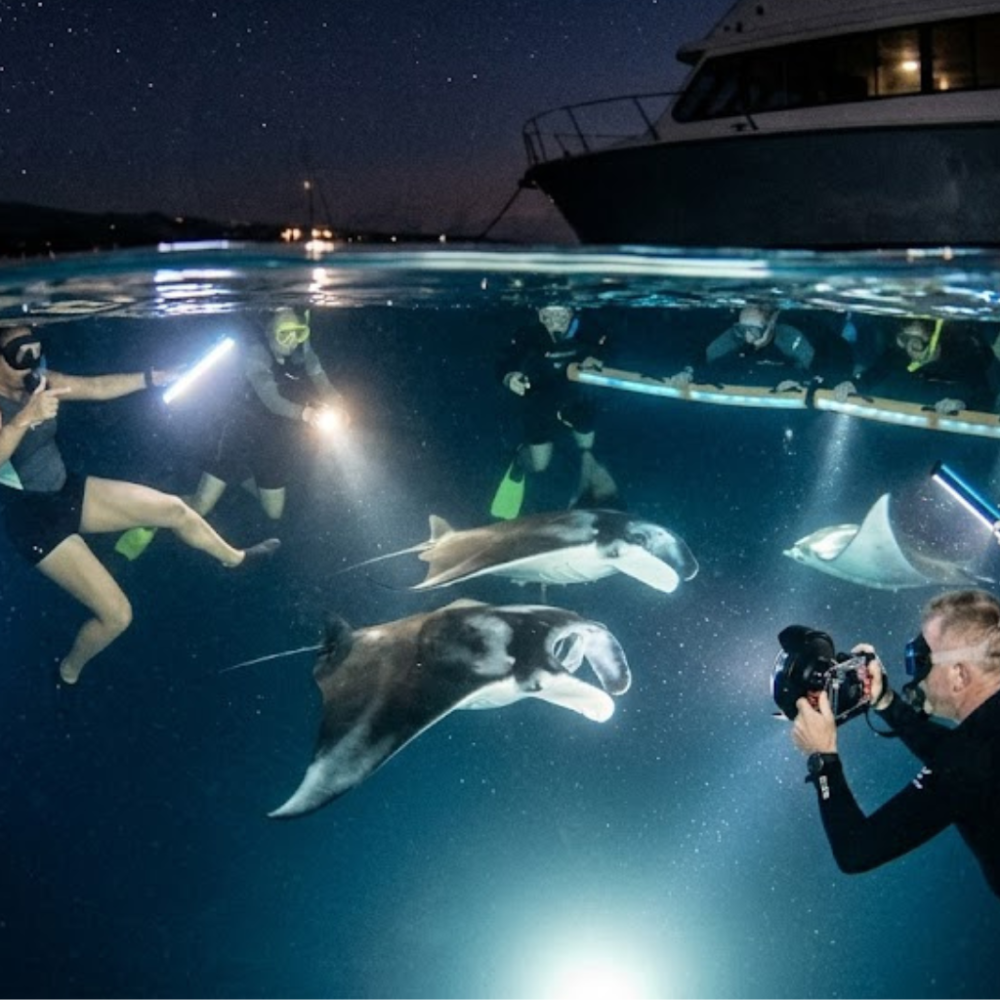
Tour operators replicate the hotel’s original effect using illuminated light boards carried by snorkelers in the water. The boards beam powerful light downward, pulling plankton toward the surface and the mantas toward the guests. You hold the board, float face-down, and the manta rays come to you.
Our guides at Sea Quest Hawaii discuss this mechanism during the tour, including the work of the Manta Pacific Research Foundation, which tracks individual rays using the unique spot patterns on their bellies, the way researchers use human fingerprints.
How Consistent Are Manta Ray Sightings at Manta Village?
This is the question most people ask before booking, and the data is clear.
Between 2009 and 2014, Manta Village recorded a manta ray sighting rate of 96 percent, with an average of 4 rays per night. Across the broader documented record, sightings occur on approximately 92 percent of nights.
That consistency comes from the stability of the feeding setup. The lights, the plankton, and the manta population are all fixed variables at Keauhou Bay. The Big Island’s resident manta ray population numbers around 100 individuals, with a coastal range of roughly 90 square miles.
They’re here year-round, and Manta Village is one of their regular stops.
If you join a Sea Quest Hawaii night snorkel and don’t see any manta rays, you receive a return visit on the Captain Cook Exclusive afternoon snorkel tour, subject to availability. This reflects how confident Sea Quest is in the site’s performance.
How to Book a Night Snorkel at Manta Ray Village with Sea Quest Hawaii
The Night Manta Ray Snorkel runs seven nights a week, year-round. June through August is peak season, and spots fill up weeks in advance.
Now that you know the answer to what is Manta Ray Village in Kona, book a tour with us! Book directly through the Sea Quest Hawaii website using the date-search calendar to check real-time availability. Private charter options are available for groups who want a custom experience on the water.
Visit the Night Manta Ray Snorkel tour page to search dates and reserve your spot.