What to Expect on a Night Manta Ray Tour in Kona
Most people have heard about the manta ray night snorkel in Kona. Far fewer know exactly what to expect on a night manta ray tour in Kona–what the experience involves from the moment you arrive at the dock to the moment you’re back on land with a warm cup of something in your hands.
This article covers all of it: the check-in, the boat ride, the light board, what you see in the water, and what happens after you climb back out into the cool night air. If you’re thinking about booking this tour with Sea Quest Hawaii and want to know what you’re getting into, you’re in the right place.
What to Expect on a Night Manta Ray Tour in Kona: What Your Day and Night Will Look Like
Check-In: What to Do Before the Boat Leaves
The Night Manta Ray Experience departs from Keauhou Bay, just a few minutes south of Kailua-Kona. Sea Quest requires you to check in 30 minutes before your departure time.
Your exact departure time changes with the season because the tour runs after dark, and sunset shifts throughout the year. Always check your confirmation email for the current time rather than assuming it’s the same as when you booked.
When you check in, the crew gets you set up with gear: a wetsuit, mask, snorkel, and fins. Prescription masks are available if you need corrected vision. You don’t need to bring your own equipment, though you can if you prefer.
One thing worth noting: you need to have prior swimming and snorkeling experience to get in the water. The crew will confirm this. If you want to come along and watch from the boat without snorkeling, you still need a ticket. The vessel has a set capacity, and every seat counts.
The Boat Ride Out to Manta Ray Village
The ride from Keauhou Bay to the snorkel site is short. You’re looking at a few minutes on the water before you arrive at the area known as Manta Ray Village, just outside the mouth of the bay.
The name isn’t a marketing term. Manta rays have fed here consistently for years. When the resorts around Keauhou Bay were built, their lights began attracting phytoplankton to the surface at night. More plankton meant more food. More food brought the manta rays, and they’ve returned to the same spot ever since.
Your captain and crew use the ride to brief you on what to expect in the water, how to hold the light board correctly, and how to stay calm and still once the mantas arrive. Pay attention here. It makes the in-water experience much smoother.
The Light Board: How the Whole Thing Works
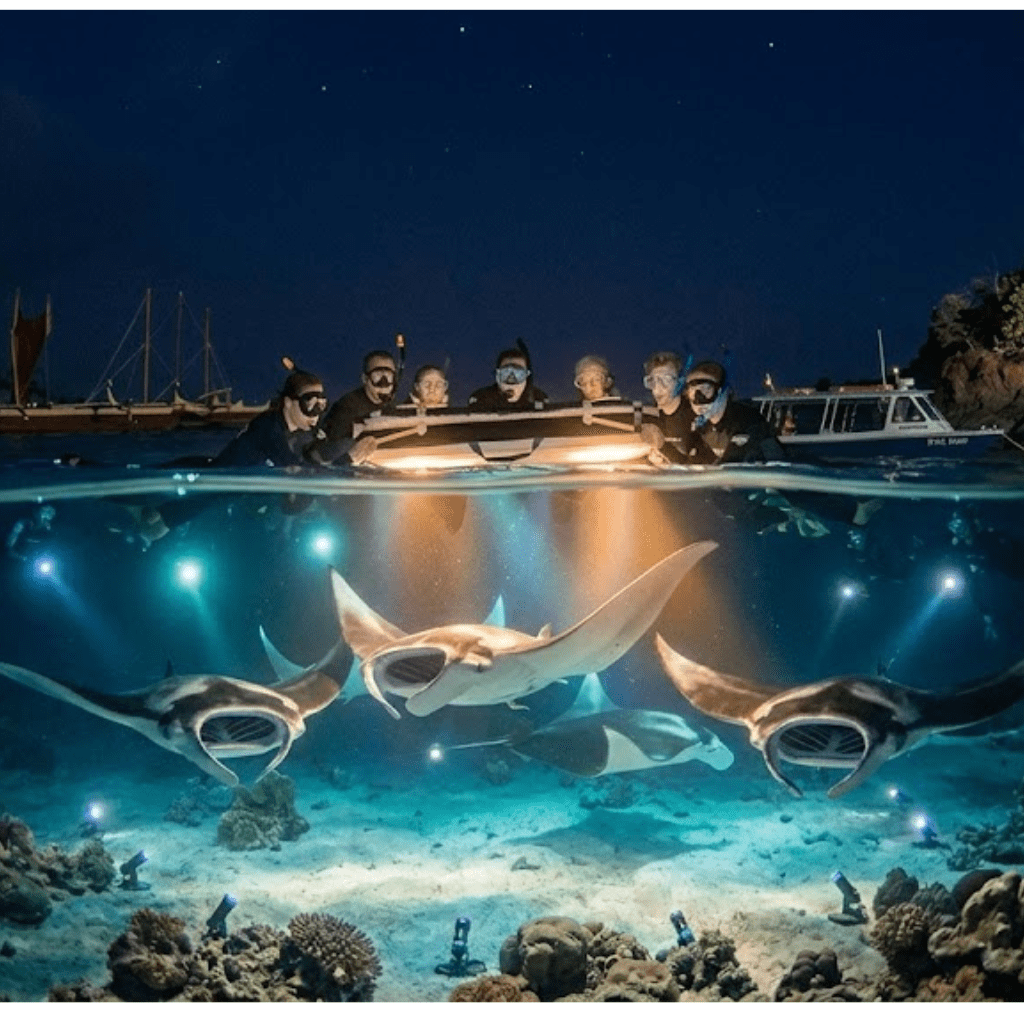
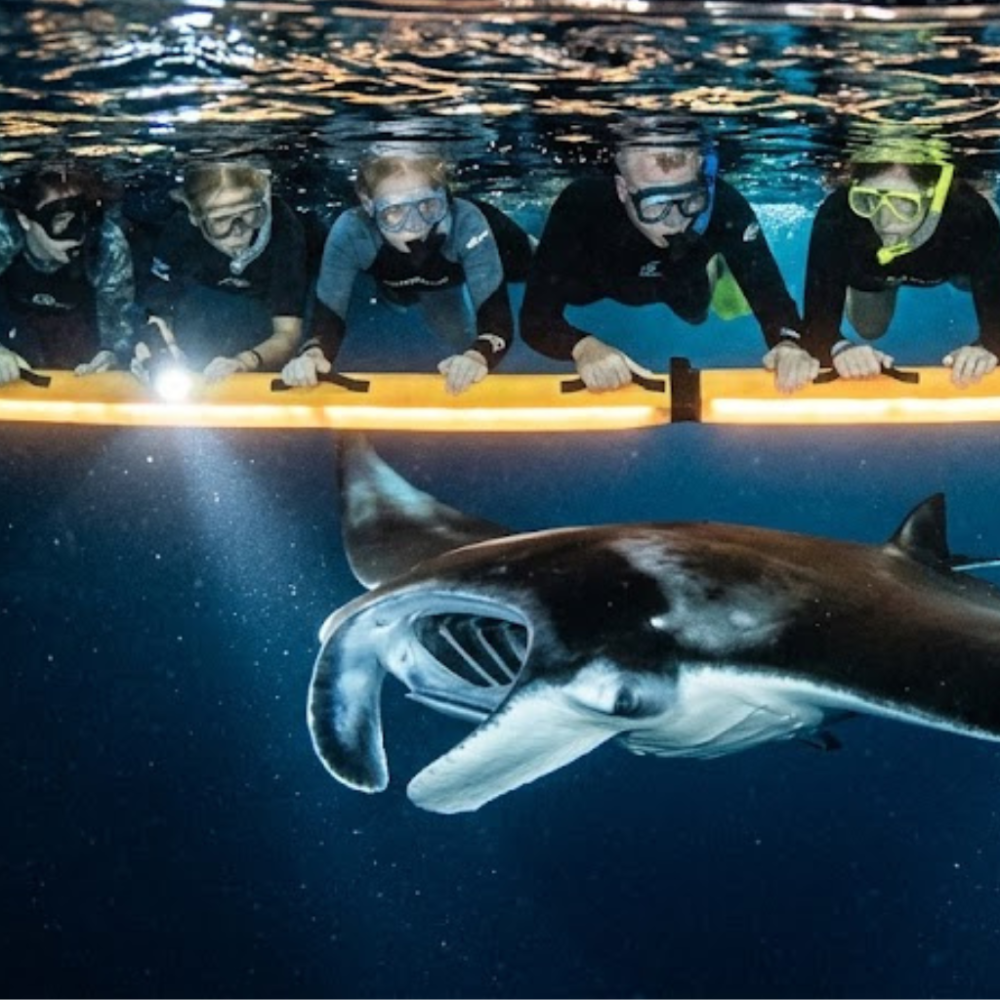
Once you’re in position, your in-water guide hands each group a flotation device fitted with powerful lights that beam straight down into the water below you. This is the light board, and it’s the key to the whole operation.
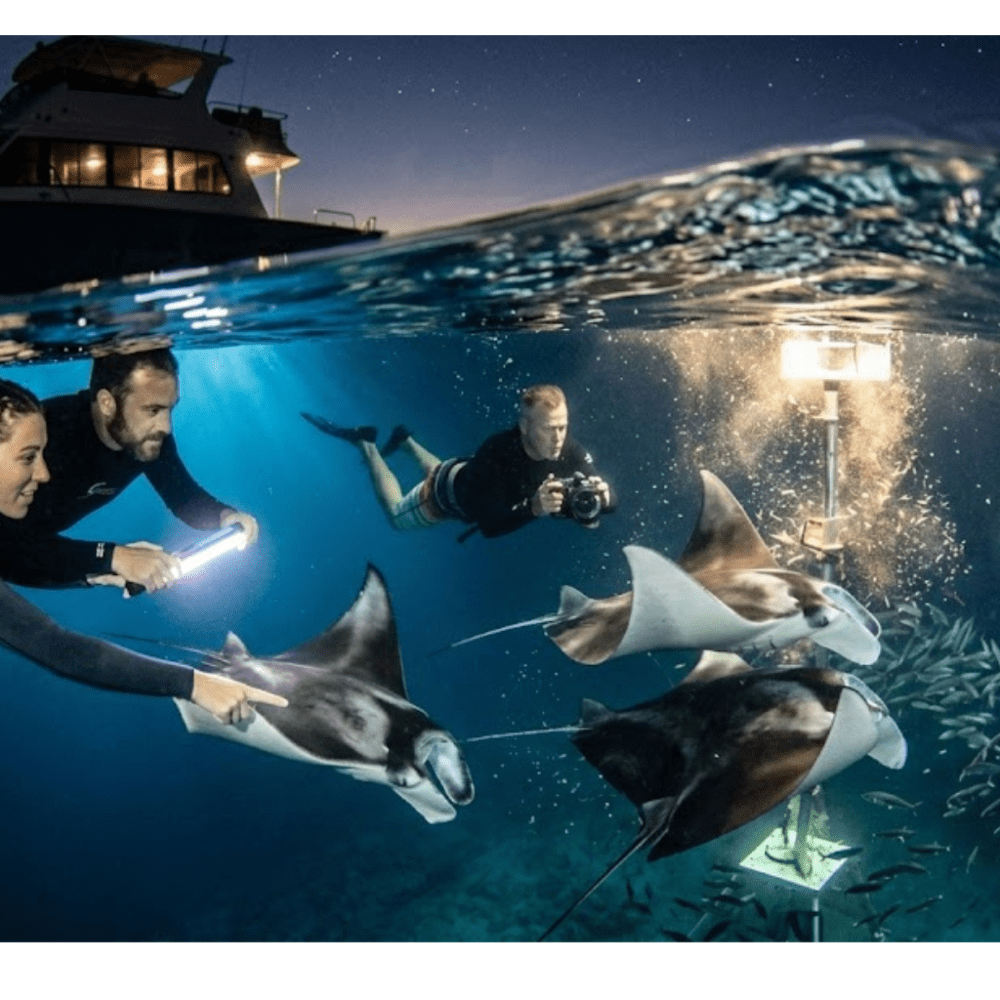
The lights draw plankton to the surface. Manta rays feed on plankton, so they follow. The feeding behavior pulls them into slow, rolling loops directly below where you’re floating. They circle, turn belly-up, and pass through the lit water again and again as they feed.
You stay at the surface the entire time. There’s no diving, no chasing, and no contact with the animals. You hold the board, keep your face in the water, and watch.
Manta rays here can reach 14 feet across and weigh close to a ton. Despite that, they have no stinging tail and no interest in anything other than the plankton. Watching one roll underneath you at close range, its white belly visible in the glow of the lights, is the kind of thing that stays with people for a long time.
What You Actually See in the Water During the Manta Ray Tour
The manta rays perform what people commonly describe as feeding loops. They roll forward, open their cephalic fins to funnel plankton into their mouths, and circle back through the light. On a good night, multiple rays work the area simultaneously, crossing paths and turning within feet of the surface.
How many you see depends on the night. The conditions at Keauhou Bay are among the most consistent manta viewing locations on the planet, which is part of why Sea Quest operates here specifically. The Travel Channel named this tour one of the top ten things to do in a lifetime. That’s not a stretch.
If you don’t see any manta rays during your tour, Sea Quest offers a return visit on the Captain Cook Exclusive afternoon snorkel tour, subject to availability.
After the Swim: Hot Chocolate, Ginger Tea, and Cookies
When you climb back onto the boat after your time in the water, the evening air will likely feel colder than you expect. Even in Hawaii, getting out of the ocean at night with wet hair and a damp wetsuit makes people feel the chill fast.
Sea Quest provides hot chocolate and cookies once you’re back on board. We also offer ginger tea, which is a practical touch for guests whose stomachs are a bit unsettled from the excitement or the motion of the water. The ride back to the dock is short, and most people are warmed up and relaxed well before they reach shore.
Bring a dry towel and a warm layer to pull on for the ride back. The crew will remind you of this during the pre-departure briefing, but it’s worth knowing in advance.
The Full Picture: Duration, Group Size, and What’s Included
Here is the overview of what to expect on a night manta ray tour in Kona. The Night Manta Ray Experience runs approximately 1.5 hours from departure to return. That includes the boat ride out, your time in the water, and the ride back.
Minimum age for participation is 7. Guests between ages 7 and 17 must be accompanied by an adult 18 or older in the water.
Gear included: wetsuit, mask, snorkel, fins, and Rx masks on request.
Refreshments included: hot chocolate, cookies, and ginger tea after the swim.
The tour requires a minimum of 8 guests to run. If that minimum isn’t met, Sea Quest contacts you with options including rescheduling or a full refund.
This is a small-group tour. We keep group sizes intimate by design, which matters in the water. A smaller group means less crowding around the light board and a better view of the mantas as they move through.
Frequently Asked Questions About the Kona Manta Ray Night Snorkel
Do I need to be a strong swimmer?
You need prior swimming and snorkeling experience. You’re floating at the surface using the light board for support, so you don’t need to be an athlete. But you do need to be comfortable in open ocean water at night.
What if I’m nervous about being in the ocean after dark?
That’s a common feeling before the tour and much less common once you’re in the water. The guided light board setup means you’re never alone and never navigating on your own. If dark water genuinely concerns you, our daytime tours are a strong alternative and there’s a chance you’ll spot a ray on those as well.
What time does the tour depart?
Departure times change with the season since the tour runs after sunset. Check your confirmation email for the exact time on your date. Plan to arrive at Keauhou Bay 30 minutes before departure for check-in.
What should I bring?
A towel, a warm layer for the ride back, and any personal medication if you’re prone to seasickness. Leave the large bags at home. The boat is a raft, not a cruise ship.
Can I bring a camera or GoPro?
Yes. An underwater camera works best for this tour. Surface photos of manta rays taken from above the water don’t capture much. If you have a GoPro, bring it.
Is the tour available year-round?
Yes. Manta rays are present at Keauhou Bay throughout the year. We run the Night Manta Ray Experience seven nights a week, weather permitting.
What happens if the tour gets canceled due to weather?
If we cancel due to conditions, you’ll be offered a different date or a full refund.
Can I stay on the boat if I don’t want to get in the water?
Yes. You still need to purchase a ticket since every seat on the vessel counts toward capacity. You can watch from the boat and still have a clear view of the activity in the water.
What is the minimum age?
The minimum age is 7. Guests between 7 and 17 must have an adult 18 or older with them in the water.
Ready to book? Now that you know what to expect on a night manta ray tour in Kona, visit the Night Manta Ray Snorkel tour page and search available dates on the Sea Quest Hawaii calendar.